
CONSOLING THE DECEASED‘S FAMILY
It is from the teachings of the Prophet that one should console and comfort a person who is in distress: “He who consoles the one in distress shall be reward-ed as much as the bereaved.”
One should take note of these points:
One should be humble
Express his grief
Speak less about worldly affairs
Avoid joking or laughing
Mention the good acts and deeds of the deceased and abstain from the ill ones.
The Prophet said, “Mention the good actions of your deceased and abstain from the offensive ones.”
The time for consoling extends for three days after the death. It is disliked to console after this period except in cases where one is not present at the funeral or when the bereaved is absent. Consoling family before the burial is permissible.
VISITING THE GRAVEYARD
Rasulullah(SA) has mentioned, “Visit the graves, for surely visiting the grave
lessens worldly love and reminds you of the hereafter.”
The graveyard can be visited on any day. Friday is preferred for this visit and if possible, visits should be weekly. It has been related in a Hadith that, “Whoever will visit his parents’ grave every Friday will be granted forgiveness and he will be recorded as an obedient child of the parents.”
WHAT TO READ WHEN ENTERING THE GRAVEYARD
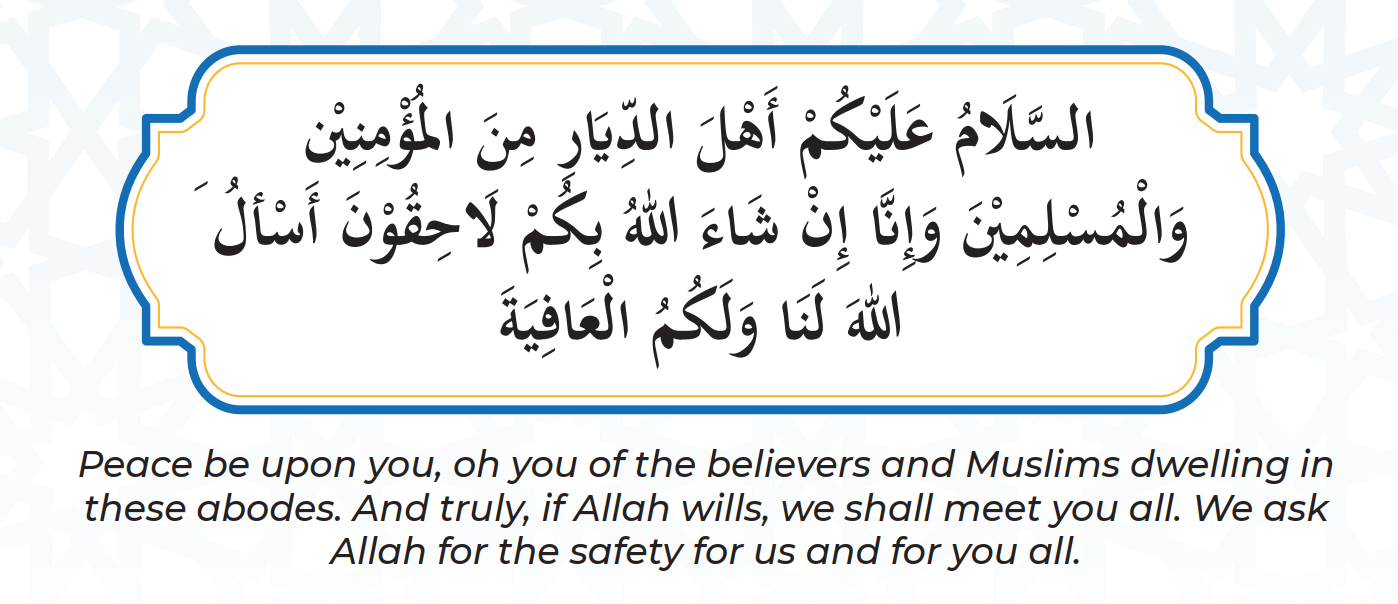
Rasulullah(SA) has taught the Sahabah (companions) these words as a saluta-tion to the people of the graves and a prayer for their forgiveness:
WHAT TO RECITE WHEN IN THE GRAVEYARD
There are many supplications that may be read at the grave site, the best being the recital of the Holy Quran. Recite from the Quran as much as possi-ble. Make Dua for the Maghfirah (forgiveness) of the deceased. As learnt from the Ahadith, the following are a few ways of offering prayer for the deceased.
Recite Surah Al-Ikhlas 11 times:
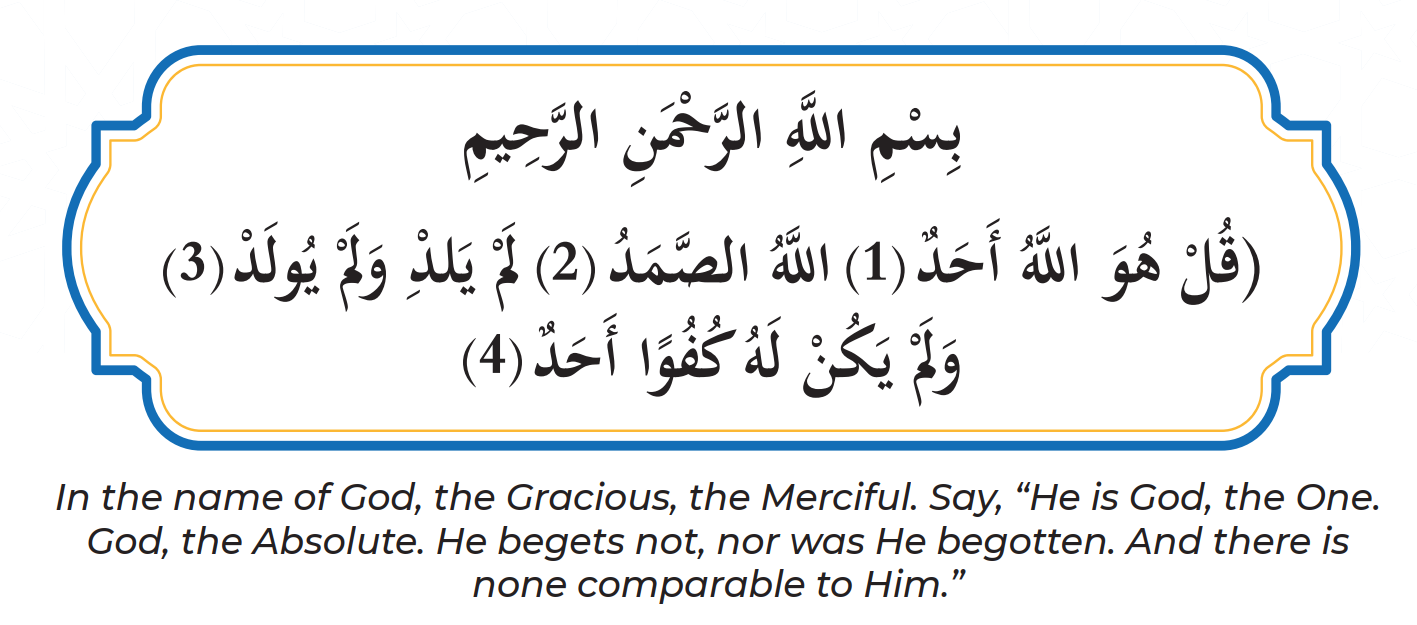
It is related in a hadith that whoever visits the graveyard and recites Surah Al-Ikhlas 11 times and then prayed for the dead will be rewarded as many times as the number of dead in the graveyard.
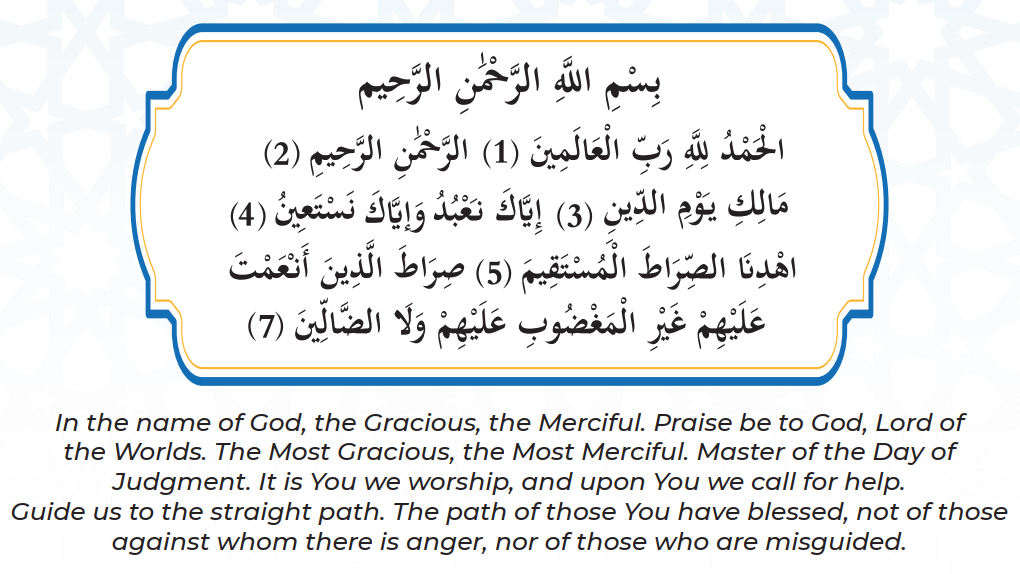
Along with Surah Al-Ikhlas, it has been reported in a Hadith that whoever visits the graveyard and recites the following Surahs and then prays for the dead, the people of the grave will also ask Allah for such a person’s forgive-ness on the Day of Judgment.
SURAH AL-FATIHAH
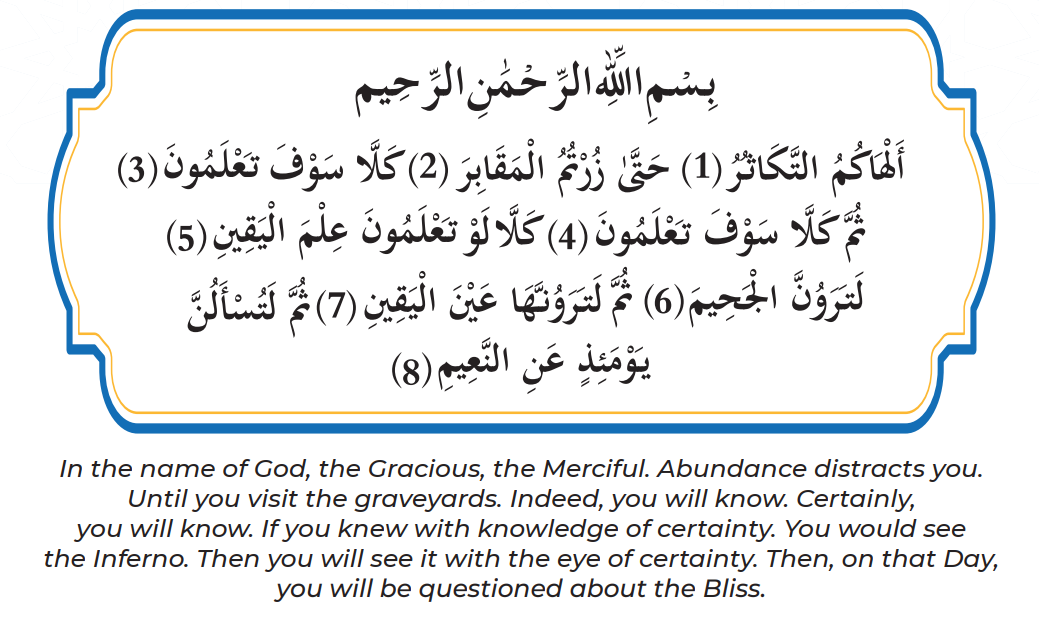
SURAH TAKAATHUR
Finally, recite Surah Yaseen. In a Hadith it is reported that if a person recites Surah Yaseen in the graveyard, the punishment of the dead will be eased, and the reciter will be rewarded as many folds as the number of dead in the graveyard.
The companions of the Prophet visited the graveyard in this manner. The words in the Hadith indicate only salutations and duas for the dead and remembering death. All other ways such as placing wreaths, flowers, or paying homage are incorrect according to the sunnah.
PERIOD OF IDDAH (WAITING PERIOD AFTER HUSBAND’S PASSING)
The period of waiting for the wife after the death of her husband is called Iddah. This period is four months and ten days.
During this period, the deceased’s wife should remain in the dwelling that they occupied at the time of the husband’s death. She is permitted to leave the house only for necessity.
If the widow is expecting a child at the time of her husband’s death, her Iddah will end after the birth of her child. The four month and ten days should NOT be considered in this case.
If a woman is not at home during the time of her husband’s death, she should return as soon as possible and pass the period of Iddah at home. The days of Iddah will be calculated from the time of her husband’s death.
A woman in Iddah should abstain from using fancy clothing, makeup, or jewelry.
POST BURIAL GUIDELINES
Gathering necessary information
Dealing with immediate needs
Important phone numbers
Settling the estate
A FEW NOTEWORTHY REGULATIONS
The trustee of the deceased should pay all debts as soon as possible. Actions to send reward to the deceased should be conducted by feeding the poor, giving Sadaqah, asking forgiveness, etc. No specific dates or days such as the third, seventh, eleventh or fortieth are mentioned in the Shari'ah for such devotions. When giving charity on behalf of the deceased, it is desirable to make intention for the fulfillment of missed prayers of the deceased.
The Shariah has NOT specified any particular type or color of clothing that should be worn by those that are bereaved.
A deceased is one who was born alive and then passed away. He/she must be named. Complete funeral procedures such as bathing (ghusl), shrouding (kafn), prayers, and proper burial must be performed.
A stillborn (birth without any sign of life) child may be named, given bath (ghusl), wrapped in a piece of cloth (no proper shrouding is required), and then buried.
There are no funeral prayers for stillborn babies. If the limbs are not formed, no name will be given and there will be no bathing (ghusl). The malformed child should just be wrapped in a piece of cloth and buried.
If any one of the parents of a dead child is Muslim, then the child will be regarded as a Muslim and complete funeral procedures should be performed for that child.
Funeral procedures including prayers should be performed for a person who has committed suicide.