
DEATH & FUNERAL
Our hope is that you will find this booklet helpful in dealing with the affairs of the deceased and provide you with a religious guide as to what issues are typical in this situation, how to work through them, and some other information which you may find useful.
While we hope this booklet tends to all of your religious questions and concerns, the reality is that all situations are rarely the same. Based on this, please use this guide as an outline for your course of action. It is
still advisable to consult the Islamic Society of Greater Salt Lake or your local Islamic society for other religious matters to help tend to your personal situation.
WHAT TO DO WHEN A PERSON IS NEAR DEATH
DYING PERSON
A person on whom the signs of death are clearly seen is called a Muhtadhar . It is Sunnah to facilitate him/her to lie on their right side, facing the Qiblah. It is permitted that he be positioned to lie on his back with his feet towards the Qiblah, and the head slightly raised with the support of a cushion so that the body faces the direction of the Qiblah. If moving the Muhtadhar causes he/she any discomfort, then leave him/her in any convenient posi-tion. It is also recommended to recite verses from the Holy Quran in the presence of the Muhtadhar.
REMINDER
Talqeen is to remind the dying person of the Shahaadatain
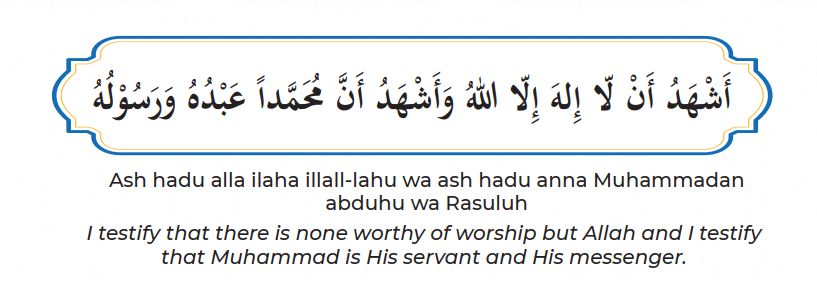
When the end nears, the dying person's breath quickens, the knees become so weak that they cannot even stand, the nose becomes bent and the temples subside. These are some of the signs that the person's end is nearing.
The Talqeen should be read loudly before the dying person taking his/her last breaths. The Muhtadhar must not be asked or ordered to read the Kalimah Shahadah, but rather reminded. This can easily be done by reciting the Kalimah aloud while being present in the room.
Once the departing person utters the Kalimah, all who are present should remain silent. The dying person should not be drawn into any worldly discussions, but if he discusses any worldly affair, then the Talqeen should be repeated once again. Those present must refrain from talking to each other.
Note: It is Makrooh (disliked) to recite the Holy Quran near the deceased person's body after death and until after Ghusl (ritual bathing of deceased).
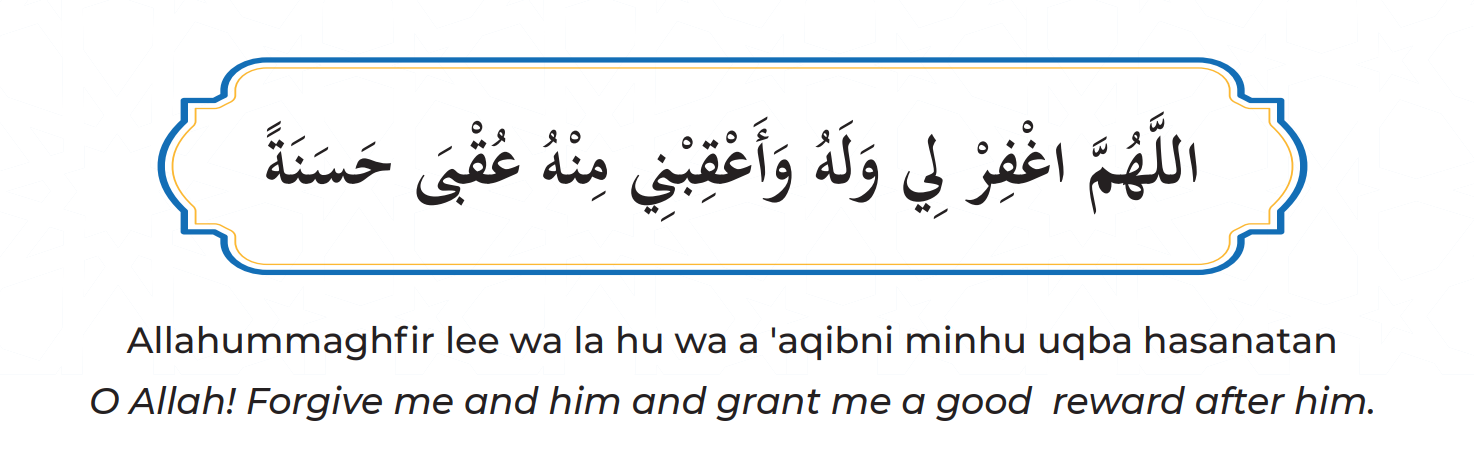
All the individuals of the deceased's family should then read the following dua:
For Male:
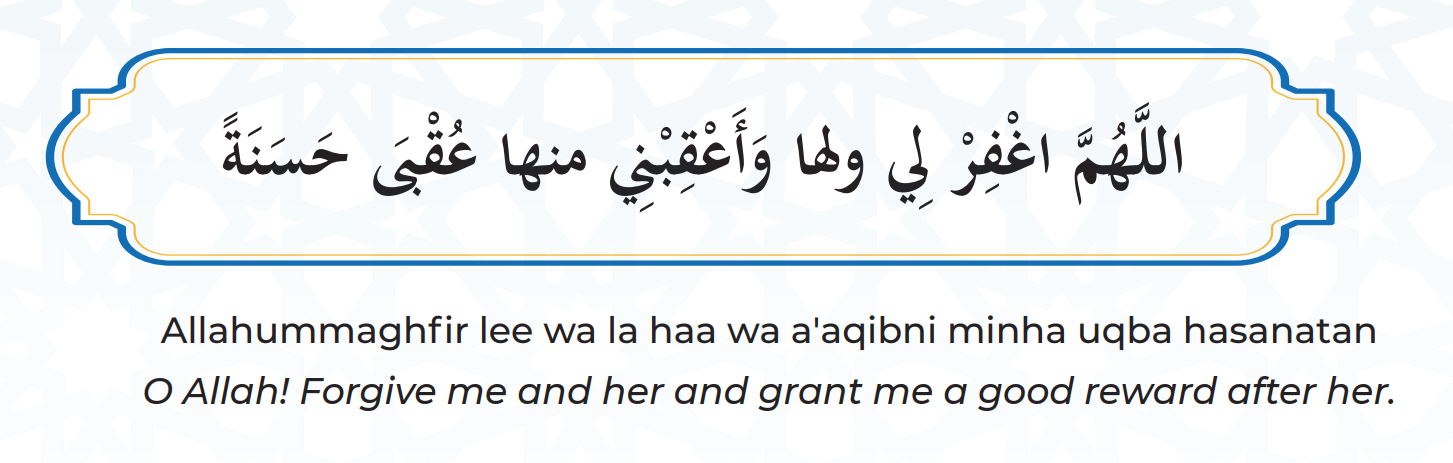
For Female:
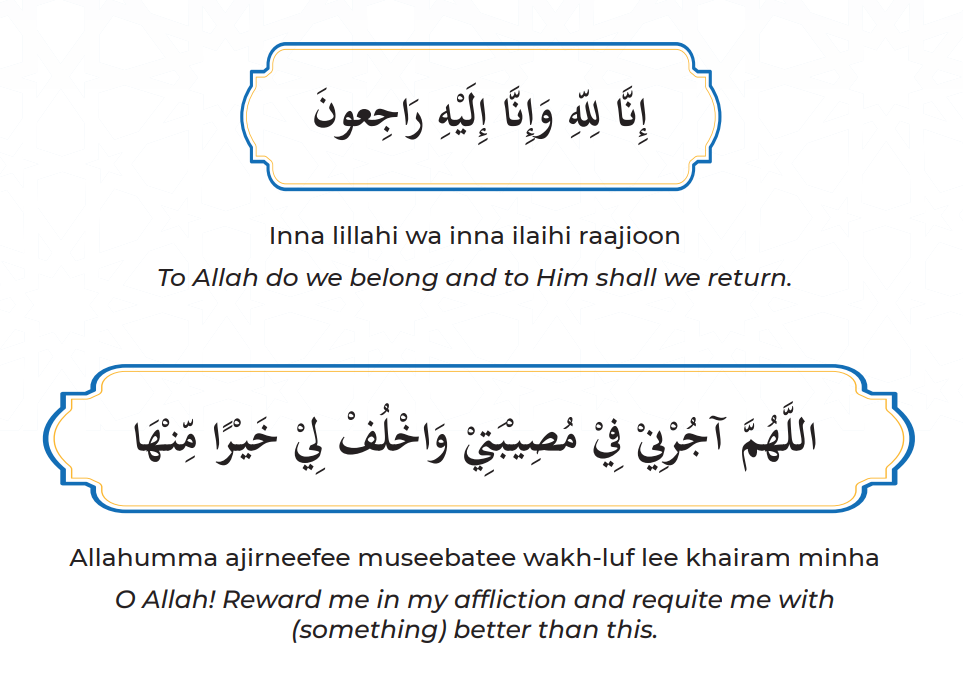
And those who are grieved by the demise may read:
WHAT TO DO AFTER A PERSON HAS PASSED AWAY
Remain calm and exercise patience.
Inform next of kin, close family, and friends.
Call our “Funeral Services” line at the Islamic Society of Greater Salt Lake at (801) 577-7901 for arrangements in regards to body transportation, ghusl (ritual Islamic bathing), kafu (shrouding), funeral prayer and burial.
Find out if a grave has been reserved and who will pay for the funeral cost.
When A Person Dies:
If a person dies at home unexpectedly call 911, have a do not resuscitate document available if it was the plan. However, if death is not unexpect-ed then you may call one’s family doctor.
If death happens in a hospice or hospital, ask the nurses or care-givers to remove all tubes, catheters, needles etc. from the body.
Additionally, you’ll need to secure the vital information statistics below:
Name, home address and telephone number
Social security number (SSN)
Marital status
Spouse last name before marriage
Occupation, type of work, type of business or industry Date of birth
Place of birth
Father’s name (last name, first name)
Father’s birthplace
Mother’s maiden name (first name)
Mother’s birthplace
Next of kin, name, address, and telephone number